
The Model for Dementia Palliative Care Project
Research Project Title
A Mixed Methods Research Study to Develop an Acceptable, Evidence- and Practice-Based Model for Palliative Care for People with Dementia in the Community.
KeyWords
Dementia, Palliative Care, Evidence-based Model, Community Care
Challenge
People are living longer, which means that more of us will get age-related illnesses such as dementia. Dementia is caused by different diseases of the brain. These diseases affect the parts of the brain which are normally used for learning, memory and language. Although Dementia usually affects people as they get older, it’s not a normal part of ageing. Many people don’t realise that Dementia is a terminal illness. People may die from dementia, not just die with dementia. Palliative Care aims to improve the quality of life of people and their families who are facing an incurable, life-limiting illness, such as dementia. Palliative care involves actively looking for symptoms of any kind- physical, social, spiritual, or psychological – and providing excellent care to lessen these symptoms. People with dementia need palliative care just as much as people with cancer, but they often don’t get it.
Research Project aims and methods
The project aimed to improve the palliative care of people with dementia, and their families, by developing a “model”. This model aims to support people with dementia to live well at home in the community for as long as possible. The model maps out what services, assessments and treatments the person might need and where, so the health system can better organise their care. To develop a model that will work in Ireland, we must first learn what is already known about “good” palliative care for people with dementia. This mixed methods study was carried out in several phases:
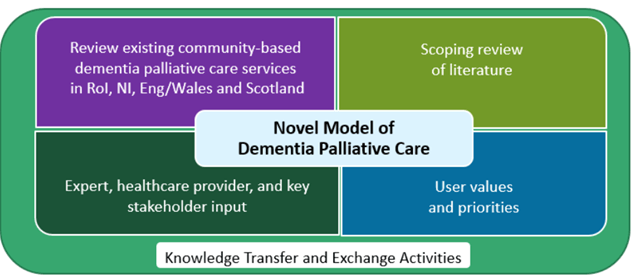
- Phase 1 of the research study involved conducting a scoping review of the available literature to allow us to see what existing services and models are supported by research evidence. This phase also involved conducting a survey to identify what key stakeholders consider to be important for a model of palliative care.
- Phase 2 of this study involved examining existing services that provide palliative care for people with dementia in: The Republic of Ireland, Northern Ireland, England, Scotland, and Wales. We conducted site visits to 4 exemplar services.
- Phase 3 involved developing a draft palliative care model which we showed to people with dementia, their families and healthcare professionals for their feedback which influenced the final model. Knowledge Transfer is a key activity throughout this project. We are engaging with HSE so that they are invested in using the final model. We are engaging with the general public to promote palliative care for everyone, including people with dementia.
- Knowledge Transfer was a key activity throughout this project. We will engage with the HSE so that they are invested in using the final model. We will engage with the general public to promote palliative care for everyone, including people with dementia.
The stages of the project are described in a ‘nutshell’ below in figure 1.
Key Findings and next steps
This research project commenced in October 2017 and has now been completed.
Phase 1: The research team designed a survey to: i) identify existing models for dementia palliative care in Ireland and the UK, and ii) to identify key components of effective models. The results of this survey (n=112) are mapped out in a logic model below (see Fig 2). A research paper based on the results of the survey study has been published (Link to paper).
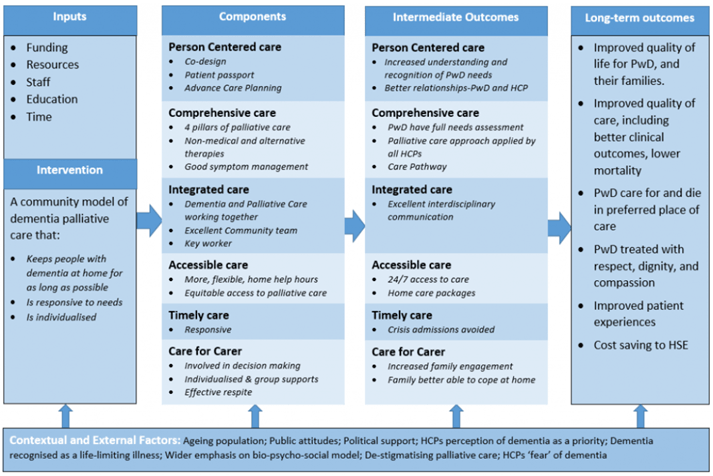
Figure 2. Phase 1 survey results displayed as a ‘logic model’
The research team have also completed a scoping review to guide their search of the literature for relevant research. The protocol is registered with PROSPERO ID: CRD42018091158. The search resulted in 19 papers which have helped to inform the development of our model for the Irish healthcare system. A paper detailing the results of the scoping review is available here.
During Phase 3 of the project, having completed the survey, scoping review and site visits we developed a draft model and engaged in consultation with key stakeholders. The process of obtaining input from people with dementia and their families is detailed in this publication.
As part of the varied knowledge transfer and exchange activities, the team produced a series of blogs on the topic of dementia palliative care (the blogs are available here). The team also collected data on how blogs may support knowledge transfer and exchange in this field; a link to a paper detailing these results is available here.
Timeline
October 2017 – June 2022
Research Team







Collaborators

All Ireland Institute for Hospice and Palliative Care (AIIHPC) who supported the knowledge transfer and exchange activities including a research event to support dissemination of the model.

HSE National Dementia Office (know the National Dementia Services) to support the dissemination of the model and alignment with the implementation of the National Dementia Strategy (2014).
Funding & Support
This research was funded by the Health Research Board (HRB).
Research Outputs
The main aim of The Model for Dementia Palliative Care Project was to improve the palliative care of people with dementia, and their families, by developing a service-delivery ‘Model’. This Model will support people with dementia to live well at home for as long as possible as this is where most people with dementia want to be.
Videos
The video clips below introduce the concept of palliative care and dementia as a terminal illness and introduces the core research team.
- The Model for Dementia Palliative Care Project: An Overview
- A Palliative Care Researcher’s Experience Using a Knowledge Transfer and Exchange Model – EMTReK [The Model for Dementia Palliative Care Project] by Dr Siobhán Fox.
Infographic
An infographic overview of The Model for Dementia Palliative Care Project is available here
Publications
This paper surveyed health and social care professionals, policy makers and academics interested in dementia palliative care across five healthcare jurisdictions (Republic of Ireland, Northern Ireland, England, Scotland and Wales). Findings of this paper help to inform the development of a novel model of dementia palliative care and inform service planning and design in other countries.
Palliative care for older people with dementia- we need a paradigm shift in our approach.
This paper emphasise the need a paradigm shift in how we approach dementia, beginning with timely diagnosis that includes the dementia type, and with services able to assess and meet emotional and spiritual needs especially around the time of diagnosis, and with timely advance care planning as an integral part of our overall approach.
This study reported that the preferred methods of reviewing research findings were scientific papers, websites and news articles, respondents read healthcare blogs “sometimes” (39.1%), with < 19% reading them “often” or “very often”, receiving an email notification might increase the likelihood of reading a new blog post for 83% of respondents, barriers to engaging with blogs included lack of time, preference for other media, lack of awareness regarding available blogs, and concerns about the credibility and source of information, and an appropriate length and the author of the blog were key features that encouraged engagement with a blog.
This scoping review identified that (i) the majority of the research reviewed focused on the effects of advance care planning, and end-of-life care, specialist palliative care input, and/or generalist palliative care provided by dementia services to enable people to remain at home and to reduce costs of care, (ii) community staff training in palliative care appeared to improve engagement with Specialist Palliative Care teams, (iii) integration of dementia and palliative care services was associated with improved care for people with dementia and their carers.
This qualitative interview study identified three main themes: living and dying well with dementia; reducing carer burden to fulfil the wish for home care; and lack of faith in the healthcare system. There was consensus that the model would allow people to live and die well with dementia, and reducing the carer burden would fulfil the wish to remain at home.
A Comparison of Four Dementia Palliative Care Services using the RE-AIM Framework.
An effective dementia palliative care service may take different forms. Whether the service is dementia-led or Specialist Palliative Care-led, efficacy is associated with providing a range of key activities and implementing them effectively. The data collected strongly suggests the benefits of the dementia palliative care services to a person with dementia and their families and offers valuable insight into the key factors for the establishment and successful running of such services.
Dissemination Events
A selection of some past events that the research team have attended to promote the project’s findings are available here.
For Further Information Contact:
Email: s.fox@ucc.ie |Tel: +353 (0)21 4627347
Email: info@aiihpc.org | Tel: +353 (0)1 491 2948