
People with advanced cancer have significant palliative care needs; however, most will be referred to specialist palliative care services very late in the course of their illness. However, little is known about how generalist palliative care, which is the responsibility of all health and social care professionals whose primary role is not specialist palliative care, is currently integrated in oncology practice. Oncology professionals also report significant barriers to integrating palliative care into practice.
The aim of the research was to understand the experiences and challenges of specialist oncology providers in integrating generalist palliative care within their practice in hospitals. The research findings would be benchmarked against existing national guidance associated with generalist palliative care provision and be used to identify recommendations to support oncology education and practice.
The PPI contributor, who had experience as a family member, become an active member of the project team and provided an expert by experience lens within the project. They attended meetings and provided feedback on research documentation and use of plain language, the planning and co-ordination of the project, and reviewed findings as they emerged from the study in reports and other documentation. They were involved in the facilitation of a PPI workshop and dissemination of the results with key stakeholders which is still ongoing.
The collaboration was strengthened by a shared commitment to respect, trust, transparency, equality, inclusion, collaboration, research excellence, curiosity, and empowerment as demonstrated by the PPI contributor’s :
Involving a PPI contributor in this study played a vital role in shaping the research instruments, co-designing the research methods, and ensuring patient-centred perspectives were embedded throughout the project.
The impact of the PPI contribution ensured that the research questions were aligned with the real needs of cancer patients and families and improved the sensitivity and accessibility of data collection tools. The PPI contribution added depth and nuance to analysis beyond clinical perspectives, and it strengthened and increased the legitimacy of the recommendations for future cancer care.
A wider impact included a talk by the PPI contributor with 123 undergraduate nursing and midwifery students in Dubin City University about the importance of a person-centred approach to care. The PPI contributor presented their experiences of clinical care provision in advanced illness from the perspective of the patient and family. Student feedback, obtained through the University’s module student survey teaching tool, reported that it was a powerful and impactful session.
Examples of students’ comments below:
“I appreciated how honest and open the speaker was. Their story helped me see the importance of communication and empathy in clinical care.”
“Hearing directly from someone with lived experience made the challenges of advanced illness so much clearer. It will definitely influence how I approach patients and families in the future”
An expert by experience contributor in this study on integrating palliative care into cancer services played a vital role by sharing lived insights, shaping the research instruments, co-designing methods, and ensuring patient-centred perspectives were embedded throughout the project. These activities were underpinned by the core principles of respect, trust, transparency, equality, and collaboration which were central to guiding this inquiry.
The integration of PPI strengthened methodological rigour by ensuring the research was relevant, ethically grounded, and sensitive to participant realities. The PPI contributor’s insights enhanced the clarity of materials, the appropriateness of methods, and the interpretation of findings. Working with the PPI collaborator has ensured that the research questions aligned with the real needs of cancer patients and families, the co-design activities improved sensitivity and accessibility of data collection tools, the PPI contribution added depth and nuance to analysis beyond clinical perspectives, and it strengthened and increased the legitimacy of the recommendations for future cancer care.
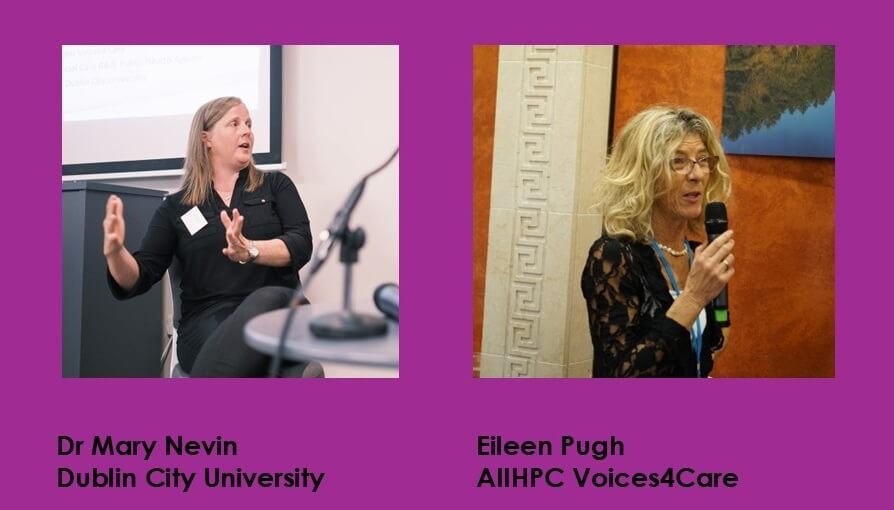
Principal Investigator: Dr Mary Nevin, School of Nursing, Psychotherapy and Community Health, Dublin City University
PPI Contributor: Eileen Pugh, AIIHPC, Voices4Care
Research Team:
Dr Amanda Drury, Dublin City University.
Dr Eileen Furlong, University College Dublin.
Dr Regina McQuillan, St Francis Hospice.
Dr Virpi Sulosaari, Turku University of Applied Sciences, Finland.
Professor Sheila Payne, Lancaster University.
The Challenge
People with advanced cancer have significant palliative care needs; however, most will be referred to specialist palliative care services very late in the course of their illness. However, little is known about how generalist palliative care, which is the responsibility of all health and social care professionals whose primary role is not specialist palliative care, is currently integrated in oncology practice. Oncology professionals also report significant barriers to integrating palliative care into practice.
The Research
The aim of the research was to understand the experiences and challenges of specialist oncology providers in integrating generalist palliative care within their practice in hospitals. The research findings would be benchmarked against existing national guidance associated with generalist palliative care provision and be used to identify recommendations to support oncology education and practice.
The PPI Contribution
The PPI contributor, who had experience as a family member, become an active member of the project team and provided an expert by experience lens within the project. They attended meetings and provided feedback on research documentation and use of plain language, the planning and co-ordination of the project, and reviewed findings as they emerged from the study in reports and other documentation. They were involved in the facilitation of a PPI workshop and dissemination of the results with key stakeholders which is still ongoing.
PPI Principles in Action
The collaboration was strengthened by a shared commitment to respect, trust, transparency, equality, inclusion, collaboration, research excellence, curiosity, and empowerment as demonstrated by the PPI contributor’s :
The Impact
Involving a PPI contributor in this study played a vital role in shaping the research instruments, co-designing the research methods, and ensuring patient-centred perspectives were embedded throughout the project.
The impact of the PPI contribution ensured that the research questions were aligned with the real needs of cancer patients and families and improved the sensitivity and accessibility of data collection tools. The PPI contribution added depth and nuance to analysis beyond clinical perspectives, and it strengthened and increased the legitimacy of the recommendations for future cancer care.
A wider impact included a talk by the PPI contributor with 123 undergraduate nursing and midwifery students in Dubin City University about the importance of a person-centred approach to care. The PPI contributor presented their experiences of clinical care provision in advanced illness from the perspective of the patient and family. Student feedback, obtained through the University’s module student survey teaching tool, reported that it was a powerful and impactful session.
Examples of students’ comments below:
“I appreciated how honest and open the speaker was. Their story helped me see the importance of communication and empathy in clinical care.”
“Hearing directly from someone with lived experience made the challenges of advanced illness so much clearer. It will definitely influence how I approach patients and families in the future”
PPI Impact Summary
An expert by experience contributor in this study on integrating palliative care into cancer services played a vital role by sharing lived insights, shaping the research instruments, co-designing methods, and ensuring patient-centred perspectives were embedded throughout the project. These activities were underpinned by the core principles of respect, trust, transparency, equality, and collaboration which were central to guiding this inquiry.
The integration of PPI strengthened methodological rigour by ensuring the research was relevant, ethically grounded, and sensitive to participant realities. The PPI contributor’s insights enhanced the clarity of materials, the appropriateness of methods, and the interpretation of findings. Working with the PPI collaborator has ensured that the research questions aligned with the real needs of cancer patients and families, the co-design activities improved sensitivity and accessibility of data collection tools, the PPI contribution added depth and nuance to analysis beyond clinical perspectives, and it strengthened and increased the legitimacy of the recommendations for future cancer care.
For More Information
Project Page: Integrating Generalist Palliative Care and Oncology Practice Project
Research Team: Dr Mary Nevin, Dublin City University, Dr Amanda Drury, Dublin City University, Dr Eileen Furlong, University College Dublin, Dr Regina McQuillan, St Francis Hospice, Dr Virpi Sulosaari, Turku University of Applied Sciences, Finland and Professor Sheila Payne, Lancaster University. PPI contributor????