

What do the general public know about palliative care and advance care planning in Northern Ireland?
Do you ever think about how you would like to be cared for if you became sick? Have you thought about what is important to you, or do you share the common view in Northern Ireland that “it’s almost superstition?….

Rethinking supportive relationships among people with life-limiting illness and family caregivers in palliative care
Family caregiving in palliative care has broadly been defined as the process in which family members, significant others or simply loved ones, provide care to a family member who has a life-limiting illness….

Palliative Care as a Human Right
The concept of a right to palliative care has emerged over the past 20 years. It has been advocated for and expanded upon in journal articles, statements, resolutions, and international declarations….

An ECRF perspective on the 14th Annual PCRN Symposium
I was privileged to be part of the organising committee for the 14th Annual PCRN Symposium following an open invitation from AIIHPC to ECRF members to be involved in the committee…
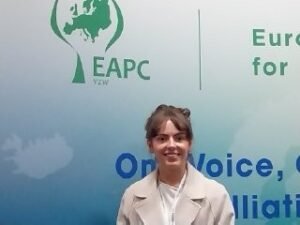
Surviving Oral Presentation Anxiety as an Early Carer Researcher
What if I mess it up? Will people understand my accent? Are they sure they want me to do this?
Here is a glimpse into my mind when I found out I had been accepted for an oral presentation at the EAPC World Congress in Finland.

Meaning-centered Psychotherapy for Palliative Care Outpatients; an Innovation in Clinical Practice
Meaning-centered psychotherapy is a group intervention designed to alleviate psychological distress among hospital outpatients with advanced cancer.The programme focuses on sustaining patients’ sense of meaning and purpose as they approach end-of-life….

Cultivating a Research Culture: My journey as a research nurse in the hospice
My own journey as a Research Nurse began in 2021 when I was offered a part-time secondment into the role. Back then, my research experience was limited, but my enthusiasm for diving into the world of research was already strong. I was passionate about making changes and improving care for people in the community, and I knew that with the right evidence it may be easier to influence the change. But I also had innate desire to learn and curiosity to explore.

Music therapy: providing a bridge back to life after loss for informal carers
Have you ever found yourself becoming emotional at a certain song or piece of music? Maybe you have discussed which songs you would want played at your funeral, or considered which music really matters to you….
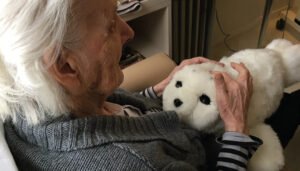
Enhancing dementia care using pet robots; moving research into real-world practice
What are pet robots?
Pet therapy can have health and social benefits for people living with dementia. However, using live pets may be challenging. For instance, some care facilities may not allow animals…..

Dementia & Technology; tools that can help maintain our relationships are worth exploring
Person-centred care describes a holistic care philosophy that focuses on prioritising the care recipient’s views and wishes. In other words, the person comes before the disease. For caregivers of people living with Alzheimer’s disease and related dementias, it can become increasingly challenging to know the individual’s preferences…

Engaging the Young Public with Palliative Care
Why is it important for everyone to know about palliative care? Is it to improve access to services? Whilst many websites offering health care information encourage people to speak to their GP….

Difficult but important conversations: Advance care planning for children receiving palliative care
When a child is receiving palliative care, early conversations in a calm environment are recommended to identify family values, plan for future care, and make decisions. However, these conversations often start too late, or during a crisis.

Volunteers’ experiences of providing bereavement care to parents following the diagnosis of a fatal fetal anomaly
The term fatal fetal anomaly is a condition that will likely lead to the death of the fetus within utero or within the neonatal period (28 days of life) despite active treatment. While this definition is generally accepted, there is no universally agreed definition of what constitutes a fatal fetal anomaly…

eLearning course to help you assess and treat people with palliative care needs experiencing constipation
Do you want to develop your knowledge and skills to learn how to improve the quality of life of people receiving palliative care and experiencing constipation? If yes, our free eLearning course is for you.

How Can We Better Support Older Male Caregivers?
Caregiving has traditionally been viewed as a female activity, which has resulted in caregiving research being mainly focussed on the experiences of female participants….

Palliative care in Intensive Care Units: A PhD Research Study
The majority of patients in ICU are over 65 years, have chronic illnesses and multi-morbidities (National Office of Clinical Audit, 2020). ICU survivors can have life-limiting illnesses, poor quality-of-life and have a high mortality…

High C-Reactive Protein (CRP) as a Predictor of Specialist Palliative Care Needs
Early specialist palliative care in cancer is associated with better patient outcomes. “Red flags” to identify people with specialist palliative care needs who are at risk of high symptom burden and poor quality of life could prompt a comprehensive assessment and early referral….

Challenges and support needs of parents and children when a parent is at end of life
The ‘Family-Centred Cancer Care team at Ulster University have been leading a programme of work since 2007. The primary aim of our work is to promote positive coping for families impacted by parental cancer..

Needs-based innovation for the management of malignant pleural effusions in the palliative care setting
The HSE has outlined that one of the major challenges relating to adult palliative care is the growing demand for services due to our ageing population….